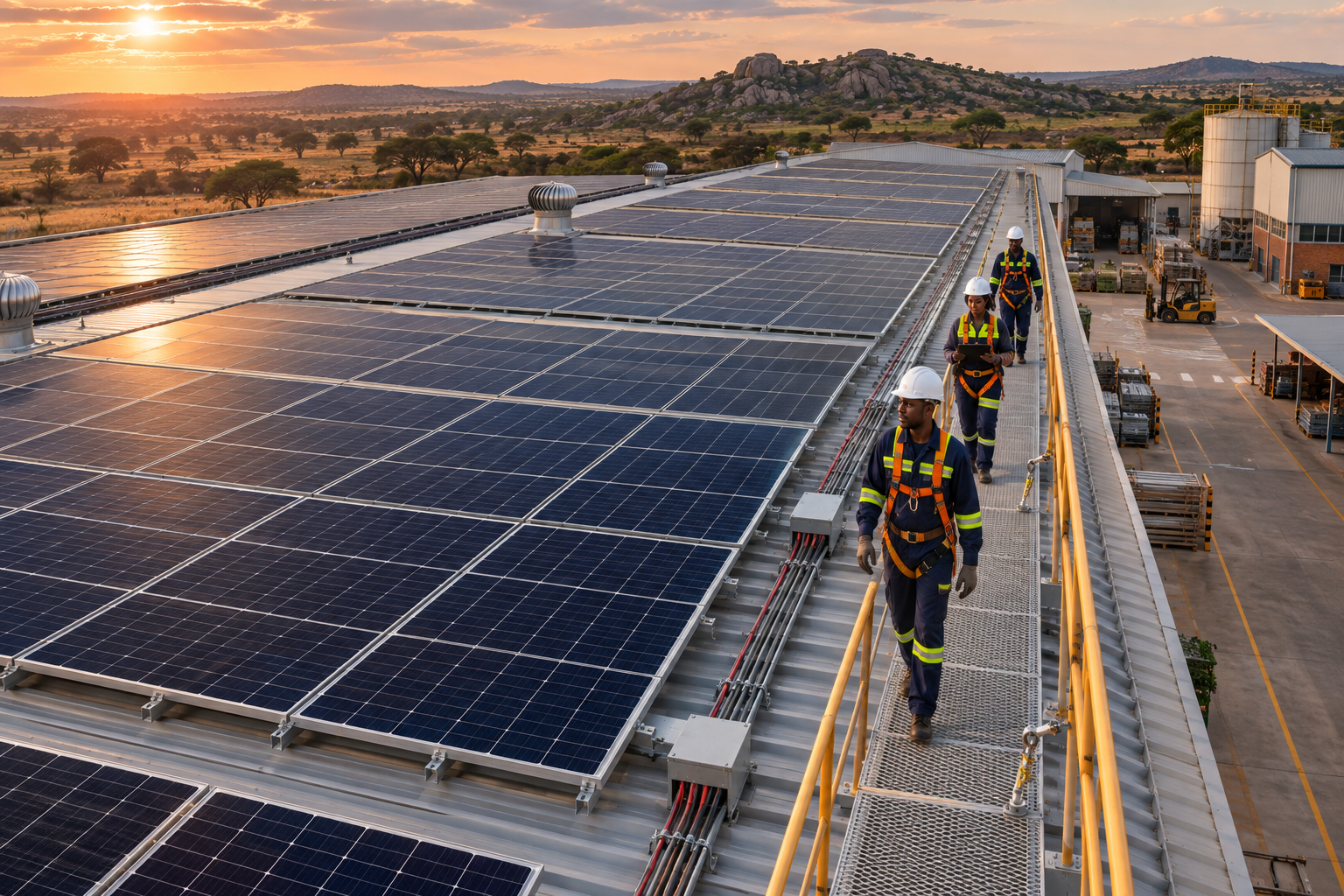
On the rooftops of Bulawayo's industrial suburbs, solar panels have become a familiar sight. For manufacturers, they are less about sustainability targets than about keeping machines running.
Great Dyke Energy builds and operates solar plants on customers' sites and sells them the power under long-term agreements, so the customer pays for electricity rather than equipment.
From savings to reliability
“Our customers used to ask how much they would save. Now they ask how many hours of production we can protect.”
— Nokuthula Ndlovu, COO, Great Dyke Energy
Tsoro Manufacturing, a packaging company in Harare, is among the businesses considering the model for its new production line, which needs a stable supply to avoid waste.
How a captive solar deal usually works
- The developer finances, builds and maintains the plant.
- The customer buys the power at an agreed rate for ten to twenty years.
- Batteries can be added to cover evenings and interruptions.
The Leader Lens
Where this leads
Executive analysis for decision-makers and capital allocators.
- Opportunity
- Installers, technicians, financiers and equipment distributors. Energy services for SMEs.
- Risk
- Equipment quality, currency risk on imported components and battery lifespan.
- What to watch
- Storage costs and any changes to rules on selling surplus power to the grid.